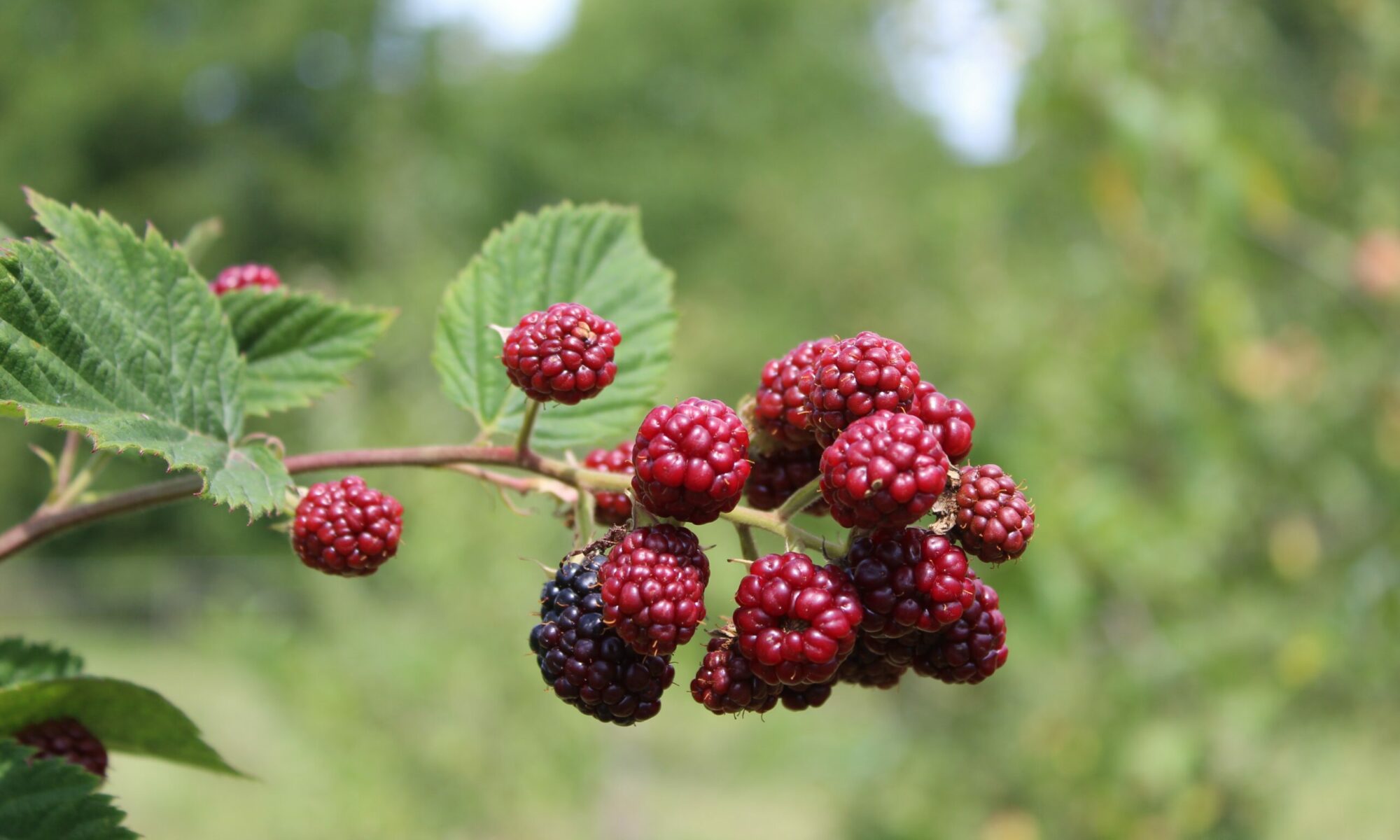
While many simply see a “blackberry,” there are fascinating differences between species like the native Allegheny and the introduced Himalayan variety.
Allegheny Blackberry (Rubus allegheniensis)
Often called the common highbush blackberry, the Allegheny blackberry is a native North American staple. It is a multi-stemmed shrub that typically grows 3 to 6 feet tall, characterized by upright, arching canes that are often purplish-red. A key identifying feature is the presence of gland-tipped hairs on its branches and flower stalks, which distinguish it from other native lookalikes. Its leaves are typically green on both sides, and its berries are prized for their sweet, sometimes slightly spicy flavor.
Himalayan Blackberry (Rubus armeniacus)
In contrast, the Himalayan blackberry is a robust, invasive species native to Eurasia that has become a “noxious weed” in many parts of North America. It is significantly larger and more aggressive, with canes that can reach 15 feet in height and 40 feet in length. You can easily spot it by the silver-white, felt-like underside of its leaves. Unlike the
Allegheny, its canes are strongly angled (often star-shaped in cross-section) and “tip-root,” meaning they grow new plants wherever a vine touches the soil. While its berries are large and delicious, its dense, thorny thickets can crowd out native vegetation and restrict wildlife movement.